In late 2023 and continuing through 2024, Zambia experienced one of its most devastating cholera outbreaks in decades — a public health catastrophe that swept through the capital city of Lusaka and rapidly spread to surrounding provinces, overwhelming hospitals, exhausting medical supplies, and claiming hundreds of lives within weeks. Schools were closed. Public gatherings were banned. The government declared a national health emergency. And images of overwhelmed healthcare workers and makeshift rehydration centres circulated across the continent, serving as a stark, sobering reminder of a disease that much of the world had assumed was largely conquered.
Cholera has not been conquered. Not in Africa. Not anywhere that lacks reliable access to clean water, adequate sanitation, and functional public health infrastructure. And while Zambia's outbreak may have originated thousands of kilometres from Nigeria, its lessons — about how cholera spreads, who it kills, and how it can be prevented — are deeply and urgently relevant for every Nigerian community, every African household, and every person who drinks water from a source that is not guaranteed to be safe.
At SanLive Pharmacy, we believe that public health crises anywhere on the African continent are our concern — because the conditions that enabled Zambia's outbreak exist in varying degrees across Nigeria. Understanding cholera, respecting its lethality, and implementing the preventive measures that genuinely work is knowledge that saves lives. This is your complete guide.
What Happened in Zambia — The Outbreak in Context
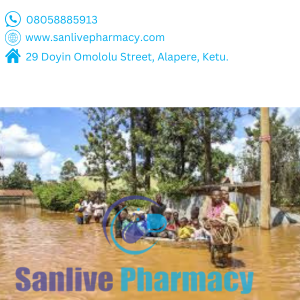
Zambia's 2023 to 2024 cholera outbreak began in Lusaka — a densely populated city of over three million people — in October 2023, driven by flooding that contaminated water sources and overwhelmed already strained sanitation infrastructure. Within weeks, the outbreak had spread to multiple provinces.
At its peak, Zambia was recording thousands of new cases and dozens of deaths per week. The case fatality rate — the proportion of confirmed cases resulting in death — rose significantly above the 1% threshold that the World Health Organization considers acceptable, reflecting both the severity of the outbreak and the challenges of timely treatment access in overwhelmed health facilities.
The Zambian government's response — school closures, bans on street food vending, mass vaccination campaigns using oral cholera vaccine, emergency water treatment programmes, and international humanitarian support — eventually brought the outbreak under control. But the human cost was devastating, and the underlying conditions that enabled it remain largely unchanged.
Why did this happen in Zambia?
The specific triggers and underlying vulnerabilities that drove Zambia's outbreak are not unique to Zambia — they are shared across much of sub-Saharan Africa, including Nigeria:
- Rapid, unplanned urban growth — population density in informal settlements far outpaces investment in water and sanitation infrastructure
- Flooding — climate change is increasing the frequency and severity of flooding events across Africa; floods contaminate water sources and create ideal cholera transmission conditions
- Inadequate water treatment — reliance on untreated surface water, shallow wells, and water vendors of uncertain quality
- Open defaecation — in communities without adequate toilet facilities, human waste contaminates soil and water
- Food vending without adequate hygiene — street food prepared with contaminated water
- Healthcare system strain — limited capacity to absorb sudden surges in severely ill patients requiring intravenous fluids
Nigeria has experienced its own cholera outbreaks — including significant outbreaks in 2021 affecting multiple states and causing hundreds of deaths. The conditions enabling cholera in Zambia are present, to varying degrees, across many Nigerian states. Zambia's experience is a warning Nigeria must heed.
What Is Cholera? Understanding the Disease
Cholera is an acute diarrhoeal illness caused by infection with Vibrio cholerae — a comma-shaped bacterium that produces a powerful toxin in the small intestine. This toxin — cholera toxin — causes the intestinal cells to pump massive quantities of water and electrolytes into the gut lumen, producing the characteristic profuse, watery diarrhoea of cholera.
The speed and volume of fluid loss in severe cholera is extraordinary — a patient can lose up to one litre of fluid per hour through diarrhoea and vomiting. Without prompt, adequate rehydration, this fluid loss leads to severe dehydration, circulatory collapse, electrolyte disturbances (particularly dangerous falls in potassium and bicarbonate), acute kidney failure, and death — sometimes within hours of symptom onset.
Vibrio cholerae has two major serogroups of clinical importance — O1 and O139. The O1 serogroup, particularly the El Tor biotype, is responsible for the current seventh cholera pandemic — which has been ongoing since 1961 and remains active across Asia, Africa, and Latin America today.
How Cholera Spreads — The Transmission Chain
Understanding transmission is the foundation of prevention. Cholera is transmitted through a simple but devastatingly efficient route: the faecal-oral pathway.
The transmission chain:
- A person infected with Vibrio cholerae excretes the bacteria in their faeces — even asymptomatic carriers shed bacteria
- These bacteria contaminate water sources — rivers, wells, boreholes, water storage containers — or food
- Another person consumes contaminated water or food
- Vibrio cholerae colonises the small intestine and produces cholera toxin
- Illness begins — typically within 12 hours to 5 days of exposure
Specific transmission routes in the African context:
Contaminated water is the primary driver of cholera outbreaks. This includes:
- Rivers, streams, and lakes contaminated by human waste — particularly after flooding
- Shallow wells and boreholes sited near latrines or open defaecation areas
- Municipal water supplies with inadequate treatment or broken distribution infrastructure
- Water storage containers (tanks, buckets, drums) that are improperly covered or cleaned
- Water purchased from vendors — sachet water and water tankers of uncertain quality
Contaminated food:
- Fruits and vegetables irrigated with or washed in contaminated water
- Raw or undercooked seafood — shellfish such as oysters, crabs, and clams filter-feed from water and concentrate Vibrio cholerae
- Street food prepared with contaminated water or by vendors with poor hand hygiene
- Ice made from contaminated water
Person-to-person transmission: Direct person-to-person transmission is less common but occurs through contact with the faeces or vomitus of cholera patients — particularly relevant for caregivers and family members of cholera patients.
The infectious dose: A critical feature of Vibrio cholerae is that a relatively large number of bacteria are required to cause infection in healthy adults — typically 10 million to one billion organisms. This means that the bacteria must be present in water or food at significant concentrations, or that host defences (stomach acid) must be impaired.
Risk is higher in individuals with reduced stomach acid — those taking proton pump inhibitors (omeprazole, lansoprazole), those with achlorhydria, blood group O individuals (who are disproportionately represented among severe cholera cases for reasons not fully understood), malnourished individuals, and young children.
Symptoms of Cholera — From Mild to Life-Threatening
The spectrum of cholera illness:
Asymptomatic infection (75% of cases): The majority of people infected with Vibrio cholerae develop no symptoms at all — yet they shed bacteria in their faeces for 7 to 14 days, silently spreading the infection in the community. This silent majority is one reason cholera outbreaks are so difficult to contain.
Mild to moderate illness (20% of cases): Watery diarrhoea and vomiting of varying severity — clinically indistinguishable from many other causes of gastroenteritis. These patients can typically be managed with oral rehydration at home if identified and treated promptly.
Severe cholera — "cholera gravis" (5% of cases): This is the dramatic, life-threatening presentation that earns cholera its historical reputation as one of humanity's most feared diseases. It is characterised by:
- Rice-water stools — profuse, watery diarrhoea with a pale, milky appearance and fishy odour; named for its resemblance to water in which rice has been washed; this appearance is pathognomonic (uniquely characteristic) of cholera
- Projectile vomiting — large volumes of watery vomit without preceding nausea
- Rapid, profound dehydration — occurring within hours; characterised by extreme thirst, dry mouth, sunken eyes, loss of skin turgor (skin tents when pinched and released slowly), decreased urine output progressing to no urine output
- Muscle cramps — particularly severe cramps in the legs and abdomen, caused by dramatic electrolyte losses
- Circulatory collapse — weak, rapid pulse, falling blood pressure, cold clammy extremities
- "Washerwoman's hands" — the wrinkled, shrivelled appearance of the hands and feet from severe dehydration
- Altered consciousness — in extreme dehydration; can progress to coma
- Death — without treatment, case fatality rate is 25 to 50%; with prompt, adequate treatment, it falls below 1%
The speed of deterioration in severe cholera cannot be overstated. A patient who appears mildly unwell in the morning can be in circulatory collapse by afternoon. This is why rapid recognition and immediate treatment — particularly rehydration — is so critically important.
Diagnosis of Cholera
In outbreak settings, cholera is primarily a clinical diagnosis — the characteristic rice-water stools and rapid dehydration in an epidemic context are highly suggestive and treatment should not wait for laboratory confirmation.
Laboratory confirmation — when available — is achieved through:
- Stool culture — the gold standard; Vibrio cholerae grows readily on TCBS agar within 24 hours
- Rapid diagnostic tests (RDTs) — increasingly available; provide results within 15 minutes; useful for outbreak confirmation and surveillance
- Dark-field microscopy — the characteristic darting motility of Vibrio cholerae can be visualised in fresh stool samples; historically important but less commonly used today
Treatment of Cholera — Rehydration Is Everything
The treatment of cholera is conceptually simple and extraordinarily effective when delivered promptly: replace the fluid and electrolytes being lost. This single intervention — rehydration — reduces cholera mortality from 25 to 50% to below 1%.
Oral Rehydration Therapy (ORT) — The Most Important Medical Intervention of the 20th Century
Oral Rehydration Salts (ORS) — a precisely formulated mixture of glucose, sodium, potassium, chloride, and bicarbonate — exploit the sodium-glucose co-transport mechanism in the intestinal wall to promote water absorption even in the presence of active cholera toxin-driven secretion. This elegant physiological insight — that glucose enhances sodium and water absorption through a mechanism unaffected by cholera toxin — transformed cholera management and has saved an estimated 50 million lives since its introduction.
WHO/UNICEF standard ORS composition:
- Sodium chloride — 2.6g
- Trisodium citrate — 2.9g (or sodium bicarbonate 2.5g)
- Potassium chloride — 1.5g
- Glucose (anhydrous) — 13.5g
- Dissolved in one litre of clean, safe water
ORS is available at SanLive Pharmacy and should be kept in every Nigerian home as a first-line emergency intervention for any severe diarrhoeal illness — not just cholera.
Home preparation of ORS when commercial sachets are unavailable:
- One litre of clean, boiled and cooled water
- Six level teaspoons of sugar
- Half a level teaspoon of salt
- Mix until dissolved; give in small, frequent sips
ORS administration:
- Mild dehydration: 50ml per kg body weight over the first four hours, then 10 to 20ml per kg after each loose stool
- Moderate dehydration: 75 to 100ml per kg over the first four hours
- Continue giving ORS for every stool and episode of vomiting
- Even vomiting patients can absorb ORS given in small sips — do not withhold ORS because of vomiting
Intravenous Rehydration — For Severe Cases
Patients with severe dehydration — circulatory collapse, inability to drink, severe vomiting, altered consciousness — require emergency intravenous rehydration with Ringer's Lactate solution (the preferred fluid for cholera) administered rapidly. This is a medical emergency requiring hospitalisation.
Antibiotics — A Useful but Secondary Intervention
Antibiotics are not the primary treatment for cholera — rehydration is. However, antibiotics reduce the duration of illness, reduce stool volume, and shorten the period of bacterial shedding — reducing transmission.
Recommended antibiotics for moderate to severe cholera (adults):
- Doxycycline — 300mg single dose; the preferred first-line antibiotic for adults; single dose improves adherence
- Azithromycin — 1g single dose; preferred for pregnant women and children; also effective against many doxycycline-resistant strains
- Ciprofloxacin — 1g single dose; effective but increasing resistance is a concern in many regions
Antibiotic choice should be guided by local resistance patterns where known. Antibiotics are not indicated for mild or asymptomatic cases.
Zinc Supplementation for Children
For children under five with cholera or any acute diarrhoeal illness, zinc supplementation (10mg daily for infants under six months; 20mg daily for children six months and older, for 10 to 14 days) significantly reduces the duration and severity of diarrhoea and prevents recurrence. This is a WHO-recommended adjunct treatment for childhood diarrhoea.
Key Preventive Measures — Protecting Yourself and Your Community
Prevention of cholera operates at multiple levels — individual and household practices, community infrastructure, and public health interventions. Every level matters.
1. Ensure Safe Water — The Single Most Important Prevention
Water safety is the foundation of cholera prevention. Every glass of water you drink and every drop used to prepare food must be safe.
At household level:
- Boil all drinking water for at least one full minute — boiling reliably kills Vibrio cholerae
- Chlorinate water — add sodium hypochlorite (household bleach) to water at the appropriate concentration; chlorine tablets are the most practical option for households without reliable fuel for boiling
- Use water purification filters — ceramic filters, biosand filters, and other point-of-use filters effectively remove Vibrio cholerae
- Store treated water safely — in a clean, covered, narrow-necked container that prevents hand contamination; never store treated water in open buckets where it can be recontaminated
- Use water from the safest available source — treated municipal supply, protected borehole, or sealed sachet water from a reputable source
- Be cautious about sachet water — in Nigeria and across West Africa, sachet water quality is highly variable; use brands with NAFDAC registration and known quality standards
During and after flooding — highest-risk period:
- Assume all flood water is contaminated — treat all water aggressively
- Do not use water from wells, boreholes, or municipal supplies that have been flooded until they have been tested and treated
- Emergency water treatment — boiling or chlorination — is mandatory during flood events
2. Practise Rigorous Hand Hygiene
Handwashing with soap and water — not hand sanitiser alone — is the single most effective personal preventive measure against cholera transmission.
Critical moments requiring handwashing:
- After using the toilet or latrine
- After cleaning a child who has defaecated
- Before preparing or handling food
- Before eating
- After handling raw fish, shellfish, or meat
- After touching soil or flood water
- After caring for a cholera patient or handling their clothing or bedding
Technique matters: Wet hands with clean water, apply soap, scrub all surfaces — including between fingers, backs of hands, and under fingernails — for at least 20 seconds, rinse thoroughly with clean running water, and dry with a clean cloth or air-dry.
Where soap and water are unavailable, hand sanitiser with at least 60% alcohol provides partial protection — but is less effective than soap and water for cholera specifically, as alcohol does not reliably penetrate the bacterial biofilm that can form on hands.
Promoting handwashing in communities: Cholera prevention requires community-wide handwashing behaviour change — particularly in settings where handwashing facilities are absent or inconveniently located. Simple interventions — placing handwashing stations with soap at latrine entrances, near food preparation areas, and at community gathering points — significantly increase handwashing rates.
3. Ensure Safe Food Preparation and Handling
Food is a critical cholera transmission vehicle — particularly street food and raw or undercooked seafood.
Safe food practices:
- Cook food thoroughly — heat kills Vibrio cholerae; cook all foods, particularly seafood, to safe internal temperatures
- Eat food while it is hot — bacteria multiply rapidly in cooked food left at room temperature; the risk of contaminated food increases dramatically as food cools and sits
- Avoid raw or undercooked shellfish — oysters, clams, crabs, and other filter-feeding shellfish concentrate Vibrio cholerae and are a significant cholera risk; cook all shellfish thoroughly
- Wash all fruits and vegetables with clean, safe water before eating — never wash produce in untreated surface water
- Avoid street food during outbreaks — street food prepared under uncertain hygiene conditions is a significant transmission risk during outbreak periods
- Peel fruits before eating — the skin of fruits washed in contaminated water carries the highest risk
- Keep food covered — to prevent contamination by flies, which mechanically transmit Vibrio cholerae
4. Maintain Adequate Sanitation
Open defaecation is one of the most significant drivers of cholera transmission in African communities — human faeces deposited in open spaces contaminates soil and water through rainfall and surface runoff.
Individual and household level:
- Use a toilet, latrine, or any form of sanitation facility consistently — every member of the household, including children
- Ensure latrines are sited at least 30 metres from water sources (wells, boreholes, rivers)
- Keep latrine pits covered to reduce fly access and contamination
- Dispose of infant faeces safely — baby faeces are as infectious as adult faeces; dispose in a latrine, not in open ground near the household
Community level:
- Advocate for and support investment in community sanitation infrastructure — pit latrines, ventilated improved pit (VIP) latrines, and ultimately sewage systems
- Community-led total sanitation (CLTS) programmes — which mobilise communities to eliminate open defaecation through collective action — have demonstrated significant effectiveness in reducing diarrhoeal disease burden across Africa
5. Oral Cholera Vaccine — An Important Public Health Tool
Oral cholera vaccines (OCVs) are a safe, effective, and increasingly important tool in the cholera prevention arsenal. Two oral cholera vaccines are currently WHO prequalified and widely used in outbreak response:
- Shanchol — two-dose oral vaccine; requires cold-chain storage
- Dukoral — two-dose oral vaccine; also provides some protection against ETEC traveller's diarrhoea
Effectiveness:
- OCV provides approximately 60 to 85% protection against cholera for two to five years following the primary two-dose course
- Effectiveness is lower in young children under five and in high-transmission settings, but mass vaccination campaigns still significantly reduce outbreak severity and spread
Role in outbreak response: OCVs are most impactful when deployed rapidly during the early stages of an outbreak — before transmission is fully established. In Zambia's 2023 to 2024 outbreak, mass OCV campaigns were a critical component of the response, protecting hundreds of thousands of people in the highest-risk communities.
OCV in Nigeria: Nigeria has conducted targeted OCV campaigns in high-risk communities during cholera outbreaks. Individuals living in high-risk areas — dense urban informal settlements, flood-prone communities, areas with poor water and sanitation infrastructure — should discuss OCV availability and appropriateness with a healthcare provider.
Critical caveat: The oral cholera vaccine is an important tool — but it is not a replacement for safe water, sanitation, and hygiene. Vaccination without addressing the underlying conditions that enable cholera transmission provides only temporary and incomplete protection.
6. Protect Vulnerable Groups — Children, the Elderly, and the Malnourished
Certain groups face dramatically elevated risk of severe cholera and death:
Young children — particularly those under five — are at highest risk because their smaller body size means dehydration occurs faster, their immune systems are less mature, and they are more likely to be malnourished. In Zambia's outbreak, children accounted for a disproportionate share of deaths.
Protecting children:
- Ensure children wash hands consistently — supervise and assist young children
- Breastfeed exclusively for the first six months — breast milk provides significant protection against diarrhoeal illness
- Ensure children are adequately nourished — malnutrition dramatically worsens cholera outcomes
- Vaccinate children against cholera where OCV is available
- Seek medical attention immediately for any child with severe diarrhoea — do not wait to see if it resolves; dehydration in children progresses rapidly
Malnourished individuals are at significantly higher risk of severe illness and death — malnutrition impairs immune function, reduces stomach acid production (increasing susceptibility), and worsens the body's ability to recover from dehydration. Addressing malnutrition is both a cholera prevention and a cholera mortality reduction strategy.
What to Do if Cholera Is Suspected — An Emergency Action Guide
Recognise the warning signs:
- Sudden onset of profuse, watery diarrhoea — particularly rice-water stools
- Rapid development of signs of dehydration — extreme thirst, dry mouth, sunken eyes, reduced urination, weakness
- Vomiting alongside diarrhoea
- Muscle cramps
Immediate actions:
Step 1: Start ORS immediately Do not wait for a diagnosis. Begin oral rehydration immediately — give ORS in small, frequent sips (a few sips every minute if vomiting). Every minute of untreated fluid loss brings the patient closer to dangerous dehydration.
Step 2: Seek medical care urgently Any patient with suspected cholera — particularly with signs of moderate to severe dehydration — needs medical evaluation immediately. Do not manage severe cholera at home.
Step 3: Isolate and contain Separate the patient from household food and water preparation. Handle the patient's faeces and vomitus with extreme care — use gloves, dispose of waste safely, and disinfect contaminated surfaces with diluted bleach. Wash all soiled clothing and bedding with soap and hot water.
Step 4: Protect other household members Everyone in the household must intensify handwashing, treat their drinking water, and monitor themselves for symptoms.
Step 5: Report to health authorities Cholera is a notifiable disease — suspected cases should be reported to local health authorities to enable outbreak detection and response.
The Broader Lesson — What Zambia's Outbreak Tells Nigeria
Zambia's cholera crisis is not a distant tragedy with no relevance to Nigeria. It is a mirror — reflecting the vulnerabilities that exist across Nigeria's densely populated urban informal settlements, flood-prone communities, and areas where access to clean water and basic sanitation remains inadequate.
Nigeria has experienced repeated cholera outbreaks — in 2010, 2014, 2018, 2021, and in multiple states in subsequent years. The conditions enabling these outbreaks — inadequate water treatment, poor sanitation infrastructure, open defaecation, rapid unplanned urbanisation, and flooding intensified by climate change — have not been resolved.
Individual and household preventive action — safe water, handwashing, safe food practices, and prompt care-seeking at the first sign of illness — saves lives in the absence of systemic change. But the long-term solution to cholera in Nigeria and across Africa requires political will, investment, and accountability in water and sanitation infrastructure — the conditions that have eliminated cholera from countries that have defeated it.
Until that infrastructure is universal and reliable, the knowledge in this article is your most powerful protection.
How SanLive Pharmacy Supports Cholera Prevention and Response
At SanLive Pharmacy, we stock and provide:
- Oral Rehydration Salts (ORS) — every household should keep ORS available at all times; it is the most important first-line treatment for any severe diarrhoeal illness
- Water purification tablets and chlorine solutions — for safe water treatment at household level
- Zinc supplements — for children with diarrhoeal illness
- Probiotics — to support gut health and resilience
- Hand hygiene products — soap, alcohol-based hand sanitisers
- Expert pharmacist guidance on cholera prevention, recognition, and when to seek emergency care
The Bottom Line
Cholera is a disease of poverty, inequality, and inadequate infrastructure — but it kills individuals, not statistics. Every person who understands how cholera spreads, who treats their drinking water, who washes their hands at the critical moments, who keeps ORS at home and reaches for it at the first sign of severe diarrhoea, and who seeks medical care immediately when dehydration is evident — is a person who dramatically reduces their own risk and the risk to their family and community.
Zambia's devastating outbreak is a reminder that cholera remains a clear and present danger across Africa. The knowledge to prevent it, recognise it, and survive it is available. Share this article. Stock ORS at home. Treat your water. Wash your hands.
These simple acts, practised consistently, are the difference between life and death.
Protect your family from cholera and waterborne illness. Visit SanLive Pharmacy for oral rehydration salts, water purification products, zinc supplements, and expert public health guidance from our pharmacist team — because prevention is always better than cure.
Disclaimer: This article is for informational and educational purposes only and does not constitute medical advice. Suspected cholera cases require immediate medical attention. If you or a family member shows signs of severe dehydration from diarrhoeal illness, seek emergency medical care immediately.
Tags: Zambia cholera outbreak preventive measures, cholera prevention Nigeria, cholera symptoms and treatment, how cholera spreads, cholera outbreak Africa, oral rehydration therapy cholera, cholera vaccine, waterborne disease prevention, cholera in children, cholera and sanitation, safe water cholera prevention, cholera diarrhoea treatment, public health cholera Africa, cholera outbreak 2024, cholera causes, how to avoid cholera, cholera home remedies, cholera and hygiene Nigeria, ORS cholera treatment, Vibrio cholerae Nigeria, rice water stool cholera, oral cholera vaccine Nigeria, cholera emergency response, flood and cholera Nigeria, SanLive Pharmacy public health

.png)
.png)
.png)